
Is It Better to Learn Massage & Esthetics Techniques In Person or Online?
Choosing between online and in-person continuing education can make a significant difference for massage therapists and estheticians, especially when learning hands-on techniques that require practice, instructor feedback, and real-time guidance.
With the growing availability of online continuing education, massage therapists and estheticians have more options than ever when it comes to advancing their education. Online courses can be convenient, flexible, and an excellent way to learn theory, review concepts, and fit education into a busy schedule.
But when it comes to hands-on techniques, is online learning enough?
At Apex Retreat Seminars, we believe there is a place for both.
However, our school focuses primarily on in-person, hands-on continuing education because we believe that certain skills simply cannot be fully understood through a screen.
Online Learning Has Its Advantages
Let's start with the obvious: online education is convenient.
For busy massage therapists and estheticians, distance learning can make continuing education much more accessible. You can often complete coursework around your schedule without traveling, taking time away from your practice, or coordinating childcare and other responsibilities.
Online learning can be particularly effective for subjects that are primarily theoretical, such as:
- Anatomy and physiology
- Business and marketing
- Ethics
- Client communication
- Research and theory
- Reviewing treatment concepts
- Foundational knowledge
Online courses can also be an excellent way to revisit material you've already learned.
There is tremendous value in being able to pause a video, review a section, take notes, and return to the material when you have time.
But learning about a technique and learning how to perform that technique are two different things.
When Hands-On Learning Makes a Difference
Imagine watching a video demonstrating a facial Gua Sha technique.
You can see the direction of the tool.
You can see the instructor's hand position.
You can hear the explanation.
You may even understand exactly why the technique is being performed.
But what happens when you pick up your own tool?
Are you applying too much pressure?
Is your angle correct?
Are you moving the tissue or simply sliding across the skin?
Are you working with the tissue appropriately?
Are you standing in a position that allows you to use proper body mechanics?
These are difficult questions to answer when you are learning alone.
This is where hands-on instruction becomes incredibly valuable.
You Can't Always See What You Can't Feel
Many advanced massage and esthetics techniques are tactile.
They require you to develop an understanding of pressure, tissue response, rhythm, direction, positioning, and subtle changes beneath your hands.
Those things can be difficult to translate through a video.
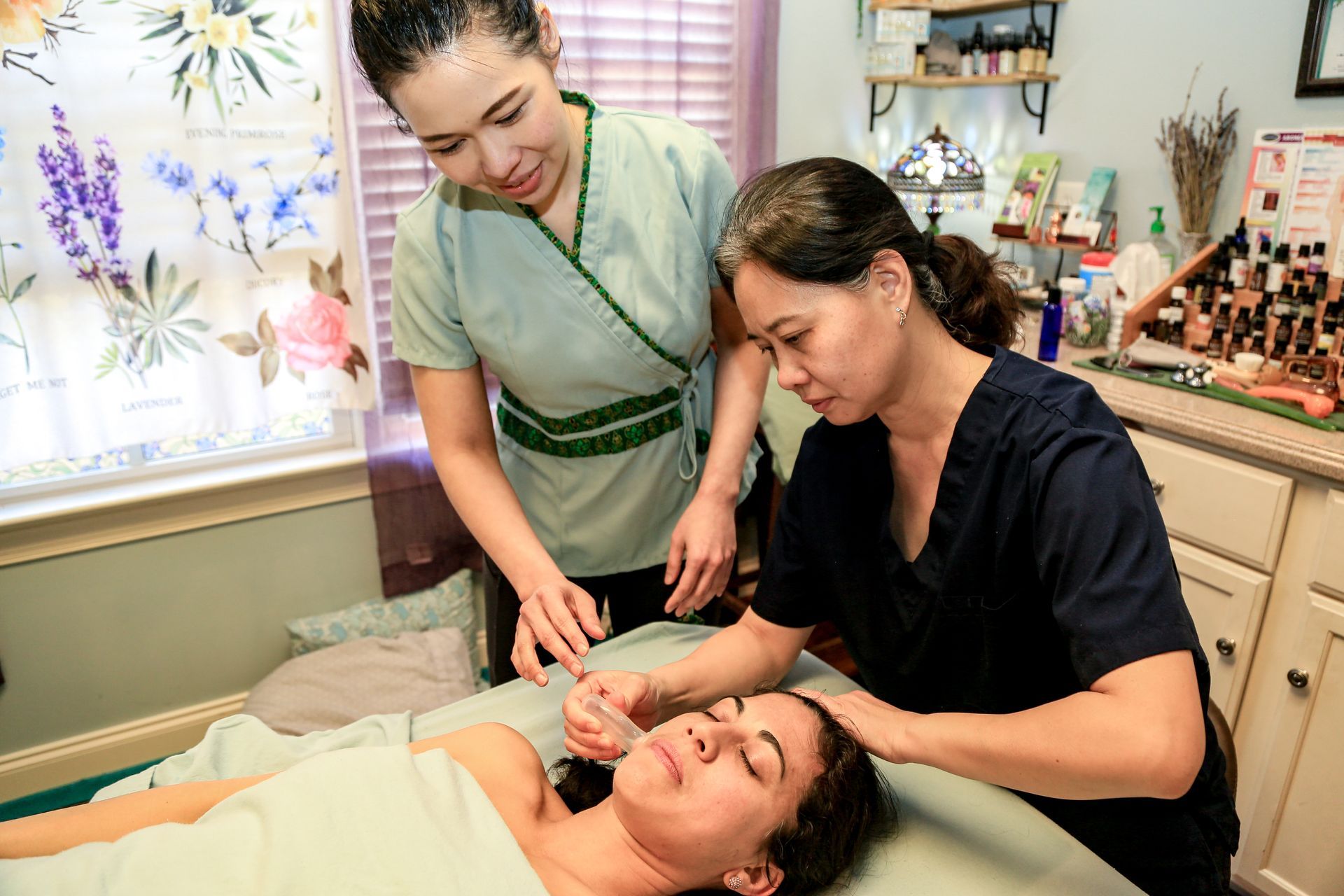
An instructor can watch you perform a technique and immediately recognize something you may not notice yourself.
They can say:
"Try less pressure."
"Change the angle of your hand."
"Slow down here."
"Feel what happens when you follow the tissue instead of forcing the movement."
That immediate feedback can change the way you understand a technique.
Instead of simply watching someone perform a technique correctly, you have the opportunity to perform it yourself, receive feedback, make an adjustment, and feel the difference.
That is a very different learning experience.
How Do You Know You're Doing It Correctly?
One of the biggest challenges with learning hands-on techniques online is self-assessment.
When you're practicing alone, you may think you're doing something correctly simply because it looks similar to what you saw in the demonstration.
But technique isn't always about what it looks like.
Two therapists can perform what appears to be the same movement while creating completely different experiences for the client.
An instructor can observe your technique from different angles and help you refine it.
This is particularly important when learning specialized techniques such as:
- Thai massage
- Gua Sha
- TMJ techniques
- Myofascial techniques (eg. Bo Jin )
- Meridian-based techniques
- Intraoral and buccal techniques
- Lymphatic techniques
These aren't simply movements to memorize.
They are skills that require practice, awareness, and refinement.of an experienced instructor, the more confident and skilled you become.
Hands-On Education Builds Confidence
There is also something powerful about practicing a new technique with an experienced instructor nearby.
The first time you learn something new, you may feel unsure.
Am I doing this correctly?
Is this too much pressure?
Where exactly should my hands be?
What should I be feeling?
Being able to ask those questions in real time helps build confidence.
Instead of leaving a course wondering whether you understood the technique correctly, you have the opportunity to practice it repeatedly while your instructor guides you.
That confidence matters when you return to your practice and begin working with your own clients.
You Learn From Your Classmates, Too
One of the most overlooked benefits of attending an in-person continuing education class is the opportunity to learn from other professionals.
Your classmates bring their own experiences, specialties, questions, and perspectives into the classroom.
One therapist may work primarily with athletes.
Another may specialize in spa treatments.
Another may have years of experience working with chronic pain.
An esthetician may approach a facial technique from a completely different perspective than a massage therapist.
Those differences create opportunities for conversation and learning that don't always happen in an online course.
Sometimes the most valuable lesson of the day comes from a question another student asks.
Continuing Education Is Also About Connection
Education doesn't have to be a solitary experience.
The massage and esthetics industries can sometimes feel very independent. Many professionals work alone in treatment rooms, operate their own businesses, or work independently within a spa.
Attending an in-person class gives you the opportunity to step outside of that environment.
You meet other professionals.
You exchange ideas.
You share experiences.
You discover different approaches to working with clients.
And sometimes, those connections continue long after the class is over.
Your classmates can become colleagues, referral partners, mentors, friends, and part of your professional network.
That human connection is an important part of continuing education.
Why Apex Retreat Seminars Focuses on In-Person Education
At Apex Retreat Seminars, we recognize that online education has its place.
We aren't opposed to distance learning. In fact, we believe online education can be an excellent option when the subject matter is primarily theoretical or when flexibility is the priority.
But our courses are intentionally designed around experiential, hands-on learning.
We want our students to do more than watch.
We want them to practice.
We want them to feel the technique.
We want them to ask questions.
We want them to make adjustments.
We want instructors to be able to observe their work and provide meaningful feedback.
And we want students to have the opportunity to learn alongside other professionals.
That's why our classes are designed to be intimate and hands-on rather than large, lecture-style experiences.
Online or In Person? Ask Yourself What You're Trying to Learn.
There isn't necessarily one right answer.
The better question is:
What type of skill am I trying to develop?
If you're learning theory, reviewing information, studying anatomy, or taking a course that doesn't require physical practice, online learning may be an excellent choice.
If you're learning a technique that involves touch, pressure, movement, positioning, tissue response, or specialized hands-on skills, consider what you might gain from having an experienced instructor physically present.
Because sometimes, watching isn't the same as doing.
And doing isn't the same as doing it correctly.
The opportunity to practice, receive feedback, adjust your technique, and try again can make all the difference.
Continuing Education Should Be More Than Checking a Box
Continuing education isn't simply about accumulating CE hours.
It is an opportunity to become a more skilled, confident, and thoughtful professional.
At Apex Retreat Seminars, we believe the best continuing education should give you something you can take back into your treatment room—not just a certificate.
Learn it. Feel it. Practice it. Refine it. Then bring it to your clients.
That's the value of hands-on education.